June 2025
A message from Superior Court of LA County Presiding Judge Sergio C. Tapia II,
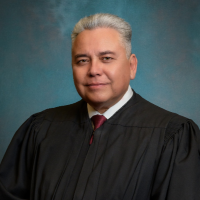 There could be no more fitting way to have begun the second quarter of 2025 at the Superior Court of Los Angeles County than by standing on courthouse steps across the nation in solidarity for the 2025 National Law Day of Action. With hands raised in unison, we reaffirmed an oath whose meaning grows deeper with every challenge we face together. I extend my heartfelt thanks to all who participated. For those who have not yet experienced this powerful annual recommitment, I hope to see you there next year.
As I enter the third quarter of 2025 as Presiding Judge, I am proud to report that the Superior Court of Los Angeles County is advancing with momentum on several initiatives close to my heart. On July 1, we launched LACourt.ca.gov, a completely redesigned, user-centric website that reflects our commitment to modern access to justice. The new site features major usability improvements, a new cleaner design, and a more recognizable domain aligned with trusted government institutions. Thoughtfully designed with accessibility at its core, this platform represents a major step forward in demystifying the judicial system and improving our connection with the public.
This launch is the culmination of years of dedicated work. From attorneys and journalists to justice partners and self-represented litigants, everyone can now more easily find the information and services they need.
The new Attorneys section, for instance, consolidates tools such as the Attorney Portal, access to tentative rulings and remote hearings, and our Digital Evidence System, all in one convenient location. As last summer’s ransomware attack on the Court reminded us, today’s court begins and ends with a secure, comprehensive digital infrastructure. We are proud to direct you to a safer and more accessible online home at LACourt.ca.gov.
This quarter also began with the adoption of the FY 2025-26 State Budget. Despite a projected $12 billion shortfall, the judiciary’s funding was preserved, with $40 million in ongoing support for trial courts statewide, a critical acknowledgment of our operational needs.
I am especially gratified to see the inclusion of $19 million statewide to assist trial courts with the implementation of Proposition 36, a need I underscored in February when I testified before a Senate Joint Informational Hearing.
The final state budget includes additional investments, including funding for a new Santa Clarita Courthouse, support for collaborative courts, and the rollout of public lactation pods across our courthouses. Though not fully meeting all our needs, the judiciary budget reflects the state’s continued commitment to ensuring justice is delivered not just in downtown Los Angeles but in every corner of our 4,000-square-mile county including. More significantly, our budget allows us to continue to meet people where they are, like the Refresh Spot on Skid Row, our Self-Help Centers, and spaces like the Second Chance Women’s Re-Entry Court, an alternative sentencing program designed to provide evidence-based, trauma-informed treatment services to women facing felony charges.
While we remain alert for possible fiscal changes that may arise from a Special Legislative Session due to federal budget developments, the Court is pleased to be in a stronger financial position than last year. I want to extend special thanks to the LACBA members who helped advocate for us at the state level.
Our commitment to modern access to justice is especially urgent in the area of family law, which accounts for approximately 100,000 cases annually. Domestic violence cases, the largest single case type in our system, highlight the deep intersection between court services and public safety. It is likely that more survivors seek protective orders at our Court than anywhere else in the country. As Presiding Judge, I am continually reminded of just how deeply the court is woven into the daily lives of Angelenos, and our Court supports a strong and accessible Domestic Violence Restraining Order (DVRO) process because we recognize the devastating impact domestic abuse has on individuals, families and the broader community.
For too long, obtaining a protective order has required survivors to endure hours, even days, of logistical hurdles, arranging childcare and transportation, and navigating through security checks, only to wait under a sign that reads “Restraining Orders.” This process has, understandably, deterred many from seeking justice.
That’s why expanding remote and digital in family law is not just a matter of convenience, it’s a matter of life and death. Decades of data and pandemic-era experience confirm that remote tools like e-filing and virtual hearings significantly increase the number of survivors willing to come forward, especially in underserved or rural communities. These tools are not just equitable and efficient – they are lifesaving.
This past quarter, I had the honor of addressing the LA County DVRO Enforcement Task Force, where I reaffirmed the Court’s commitment to creating a system that is clear, compassionate and effective for every survivor. Domestic violence is not only a personal crisis – it is a public emergency that demands a swift, coordinated legal response.
Beginning this quarter, our Court will become the first in California to implement real-time firearm relinquishment alerts in all DVRO cases. These alerts will notify law enforcement across all 88 cities in LA County, ensuring that DVRO orders are enforced promptly. When lives hang in the balance, seconds matter, and this interagency collaboration will save lives.
We are also preparing to release a new three-year strategic plan this summer. Developed over the last six months by an advisory committee of judicial officers and court leadership, this plan outlines key goals to enhance our services and operations. At the heart of this effort is a mission to transform the court user experience by improving accessibility, encouraging innovation and building a future-ready workforce.
California’s courts are increasingly asked to do more with less. The judiciary’s traditional deliberative pace must now adapt to a world that demands agility, accessibility and innovation. The modern court cannot wait behind the bench; it must meet people where they are, create safe spaces for justice and continue to evolve.
Thank you for being valued partners in this mission.


 Copyright 2026 LOS ANGELES COUNTY BAR ASSOCIATION